
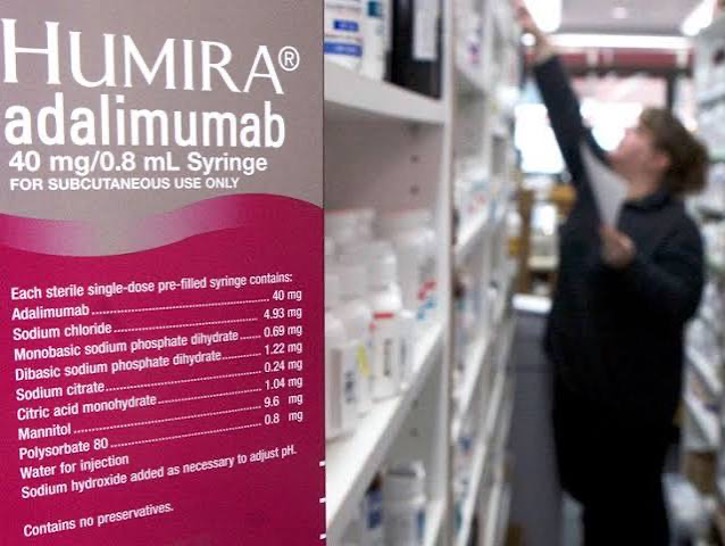
In the early 1990s, rheumatoid arthritis (RA) was treated with blunt tools like steroids, NSAIDs, and methotrexate, none targeting the actual cause. Researchers studying synovial fluid and blood samples from RA patients found something consistent: abnormally high levels of a cytokine called TNF-alpha, sitting right in the inflamed joint tissue.
Why the Samples Were Essential
- Synovial fluid biopsies showed TNF-alpha wasn't just a bystander — it was present at the site of active inflammation, in the fluid directly bathing the damaged joint
- Blood serum samples across patient cohorts confirmed the pattern held systemically, not just locally
- This gave researchers a single, clear molecular target behind a disease that had previously been managed, not understood
The Result
Humira was designed as a fully human monoclonal antibody that binds and neutralizes TNF-alpha directly, calming the inflammatory cascade at its source rather than suppressing the immune system broadly. It went on to become the best-selling drug in pharmaceutical history.
The UPDATE
Humira's dominance has essentially collapsed. Adalimumab biosimilar sales account for more than 80% of adalimumab utilization, with US Humira sales of perhaps only $1.5 billion in 2026. AbbVie announced Humira net revenues of only $425,000,000 for the second quarter, another massive drop of 47% versus the same quarter of last year.
This wasn't just gradual biosimilar erosion. It was accelerated by payer policy. CVS Caremark removed branded Humira from its national commercial formularies, causing Hyrimoz prescriptions to skyrocket, and similar formulary shifts have continued across major health plans into 2026.
Why this Matters for the Biosample Story:
TNF-alpha, the molecule discovered in that original synovial fluid research, turned out to be so fundamental to autoimmune disease that it became one of the most "copyable" biologic targets in history, which is exactly why biosimilars could catch up once the patent expired. The same tissue-sample science that built Humira also, indirectly, built the entire biosimilar industry that eventually overtook it.
AbbVie's response is itself a continuation of the biosample story: rather than defend Humira, the company shifted R&D toward next-generation immunology drugs, specifically, Skyrizi and Rinvoq, discovered using the same patient tissue-sample approach, targeting different inflammatory pathways (IL-23 and JAK, respectively) to stay ahead of the commoditization curve.
The Takeaway:
No synovial fluid sample, no TNF-alpha pattern, no clear target, no drug — and ironically, that same clarity of target is what made Humira so easy to copy once patents expired. The next chapter of immunology isn't about defending old targets; it's about samples revealing new ones faster than competitors can follow.


Leave a Reply